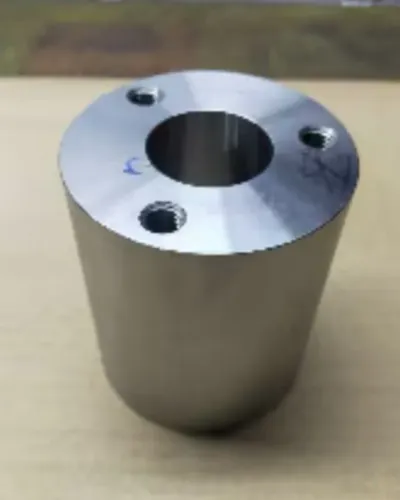
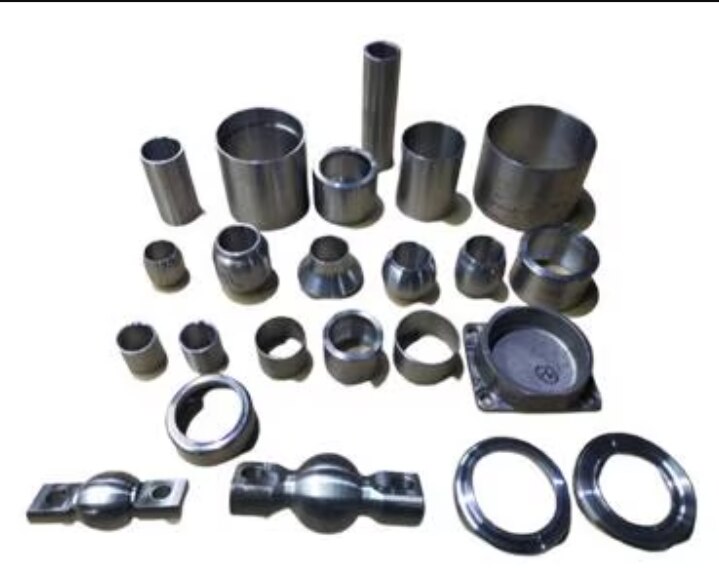
A fast requirement for a cast-iron component becomes slow when the drawing, casting route, machining datums, inspection plan, or delivery promise is incomplete. You will be able to judge whether a CI casting suits VMC machining, prepare a quote package, separate machining time from casting lead time, and compare supplier evidence before placing an order.
Key takeaways
- Use one setup when datum relationships between faces and bores matter.
- Send the casting drawing, material grade, quantity, tolerances, and delivery date for a usable quote.
- Require dimensional reports, material certificates, and casting defect records for critical components.
- Compare suppliers on process control, inspection evidence, lead time, and response quality.
What a VMC does to a CI casting—and when it is the right process
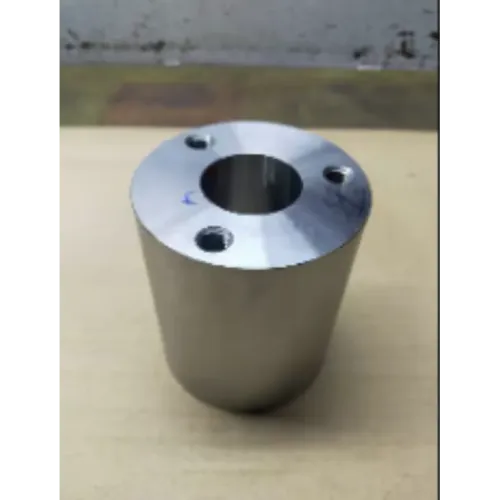
A VMC turns a rough CI casting into a functional component by locating it against controlled datums, then removing stock with face milling, drilling, tapping, boring, pocketing, and contour machining. One setup is valuable: reclamping can shift the relationship between mounting faces and bores, causing assembly failure even when each feature measures correctly.
Use a VMC when the casting has accessible planar faces, repeated holes, pockets, or contours, and controlled workholding can achieve the drawing tolerance. Check the complete process, not only three-axis travel:
- Confirm the machine envelope, table load, spindle torque at the planned cutter diameter, tool capacity, probing, and fixture access.
- Keep critical faces and bores in one setup when possible; probe the datums and verify feature relationships.
- Choose turning for rotational parts, horizontal machining when several faces need access with fewer reclamps, manual machining for simple repair work, and five-axis machining when compound access makes repeated setups inefficient.
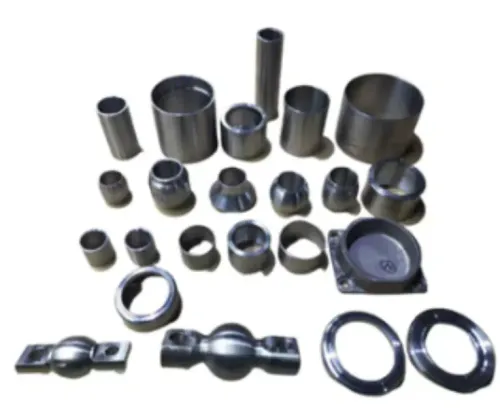
VMC-machined castings retain the casting’s near-net shape and damping, unlike fabricated steel parts assembled from cut and welded plate. Ductile iron offers higher toughness; aluminium reduces weight; a fully machined billet avoids casting defects but creates more waste and machining time.
| Option | Main distinction | Choose it when |
|---|---|---|
| CI casting | Cast shape, graphite-bearing iron | Rigidity and damping matter |
| Ductile iron | Tougher nodular graphite structure | Impact loading matters |
| Aluminium casting | Lower density | Weight reduction matters |
| Machined billet | Solid stock, no casting cavity | Geometry or soundness demands it |
How do you decide whether a CI casting is suitable for VMC machining?
Start with the material: write grey iron or ductile/SG iron, not “CI” alone. Grey iron may be specified to IS 210 or ASTM A48/A48M; ductile iron uses ASTM A536 or the applicable Indian Standard. Require the grade, hardness range, wall thickness, casting weight, machining allowance, and casting dimensional class under ISO 8062.
For ci casting parts in pune, these details determine whether stock and workholding are realistic.
Machining tolerance and casting tolerance are separate. A finished bore of ±0.05 mm does not mean the raw casting arrives to ±0.05 mm; the VMC creates the finished feature after locating the casting correctly.
The drawing must identify:
- Machining datums, casting reference surfaces, functional faces, and surfaces permitted to remain as-cast
- Raw and finished dimensions, hole sizes and depths, thread or fit class, flatness, parallelism, surface finish, and positional tolerances
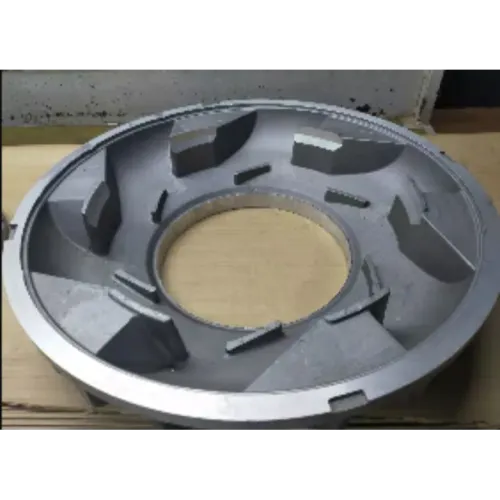
Check defect risk before approving the design. Chilled or white-iron areas and hard inclusions accelerate carbide-tool wear; shrinkage can cause rejection after boring; thin sections can distort, vibrate, or fail during machining. Excessive allowance also increases cutting forces and cycle time.
Do not assume a small or interrupted hole is acceptable as-cast. Specify a solid boss or pilot for later drilling, interpolation, boring, or reaming, and state the required machining allowance. For a critical bore, control its datum-to-feature position rather than checking only the casting’s outside dimensions.
What must a fast CI casting quote contain, and where does the time go?
A usable fast casting component supply quote starts with a complete manufacturing package, not “urgent CI casting parts in Pune.” Send a revision-controlled drawing and state:
1. Material grade, such as FG200 or FG260; casting weight; raw and finished dimensions; machining tolerances; surface finish; hole sizes and depths; thread details; datum scheme; quantity; delivery date; packaging standard; heat-treatment or stabilisation requirement; inspection plan; and acceptance criteria.
2. Separate fast machining of an existing, approved casting from supply of a new casting. The first route covers fixture preparation, VMC programming, machining, inspection, and dispatch. The second adds pattern or core-box work, tooling changes, foundry scheduling, melting, pouring, cooling, fettling, material testing, machining-allowance review, fixture design, first-off machining, and approval.
3. Ask for dates split into casting, heat treatment or stabilisation, VMC machining, inspection and approval, and dispatch. “Dispatch in seven days” can describe only transport time, not seven-day manufacture.
4. Check what can move the date: an unavailable pattern, repaired core box, changed risers, limited foundry capacity, or delayed first-article approval. Excess machining stock can also add cutting time and expose defects.
Repeat orders become faster when the pattern, core box, casting revision, and inspection records remain controlled. Require written approval before a changed pattern or casting revision enters production.
What inspection evidence should you require for Pune CI and rail components?
A hardness value cannot prove ductile-iron nodularity or rule out internal shrinkage. Accept a Pune CI component only against evidence tied to its grade, drawing, functional features, and defect risk.
1. Request heat or batch identification, a material test certificate matched to the specified grade, chemical analysis, and hardness results. For ductile iron, add tensile results and graphite or nodularity evidence where required. “CI” alone is insufficient.
2. Require a dimensional inspection report covering datum-to-bore position, mounting-face flatness and parallelism, bore size and finish, thread or fit class, runout, and other functional relationships. Overall length, width, and height alone can pass while the part fails assembly.
3. Request casting-defect records, first-off approval against the revision-controlled drawing, and the agreed non-destructive testing report. Specify magnetic-particle testing for suitable ferromagnetic surface and near-surface defects, dye-penetrant testing for open-to-surface defects on nonporous surfaces, or ultrasonic testing for suitable internal volumes.
4. Put method, coverage, acceptance level, access limits, and test timing in the purchase order. State whether testing occurs before or after machining; generic “NDT required” is not an acceptance criterion.
5. For rail products near Pune, identify the governing Indian Railways or RDSO drawing, approved-source rule, quality-assurance plan, special-process qualification, traceability requirements, and NDT requirements. Correct dimensions do not make a general industrial casting rail-ready.
How should you compare a Pune supplier before placing the order?
Choose the supplier that can show control at each handoff, not the one that promises “urgent” delivery. Compare the manufacturing package, sample inspection report, material documentation, and split lead time.
| Supplier evidence | What to verify | Warning sign |
|---|---|---|
| Controlled tooling | Pattern, core-box, core-print, and riser revision records | “Same as last time” without revision history |
| Foundry capability | Grey-iron or ductile-iron grades, chemistry, hardness, and defect controls | “CI” with no grade or test record |
| Machining control | Fixture design, VMC access, probing, datum strategy, and inspection capacity | Overall dimensions only |
| Delivery control | Dated casting, stabilisation, machining, approval, and dispatch dates | One vague “urgent” date |
| Release control | First-article approval, packaging standard, and batch traceability | Full-batch production before acceptance |
Ask what happens if excess stock, distortion, a chilled patch, hard inclusion, or misplaced pilot hole reaches machining. The response should identify containment, rework limits, replacement responsibility, and the cost of a second machining setup when the functional datum relationship fails.
For repeat production, require records linking pattern revisions, core-print changes, riser changes, drawing revisions, and inspection results. A repaired core box can alter wall thickness and machining allowance without changing the finished drawing.
Virdaks Engineering India Private Limited can be compared with other Pune-area manufacturers only when it supplies this evidence. Use a first-off acceptance gate before releasing the full batch, especially when comparing ordinary CI casting parts in Pune with components requiring railway approval.
A fast casting component supply programme is credible only when the schedule is dated and responsibility for rework, replacement castings, and packaging is written into the order.
Related products
 | Rail Parts Virdaks Engineering Overview Virdaks Engineering offers high-quality CI (Cast Iron) Casting Parts manufactured to meet the demanding requirements of... View product → |
 | CI Parts Virdaks Engineering India Private Limited supplies high-quality Cast Iron (CI) parts engineered to meet strict UK industrial standards. View product → |
Frequently asked questions
What does a VMC do to a CI casting?
A vertical machining centre locates the rough casting from controlled datums and machines faces, holes, threads, bores, pockets, and contours. One setup helps preserve the relationship between features.
How do you decide whether a CI casting is suitable for VMC machining?
Check the casting’s material grade, machining allowance, datum surfaces, wall thickness, distortion risk, hardness, and drawing tolerances. Confirm that the casting has enough stable stock for every machined feature.
What must a fast CI casting quote contain?
Provide the part drawing and revision, CI grade, raw casting status, annual or batch quantity, critical tolerances, surface-finish requirements, inspection needs, packaging instructions, and delivery location and date.
What inspection evidence should you require for Pune CI and rail components?
Request a dimensional inspection report against the drawing, material test certificate, casting traceability, hardness results when specified, visual or non-destructive test records when required, and calibration details for measurement equipment.
How should you compare a Pune supplier before placing the order?
Compare the supplier’s proposed datums, fixture plan, machining capacity, inspection method, traceability, lead time, rejection handling, and sample documentation instead of comparing price alone.
Related product
 | ID Taper Controlled in 20 Microns – Precision Export Component ID Taper Controlled in 20 Microns – Precision Export Component Virdaks Engineering India Private Limited proudly offers high-precision components with ID taper controlled within 20 microns, ensuring exceptional... View product → |
Keywords