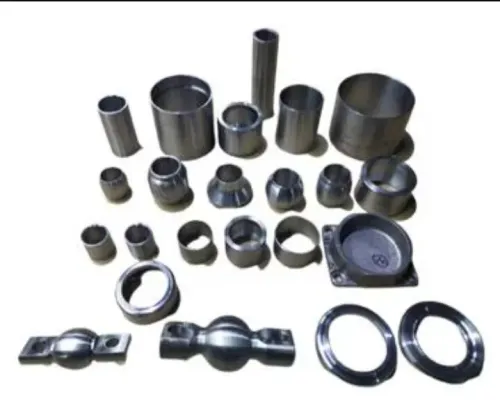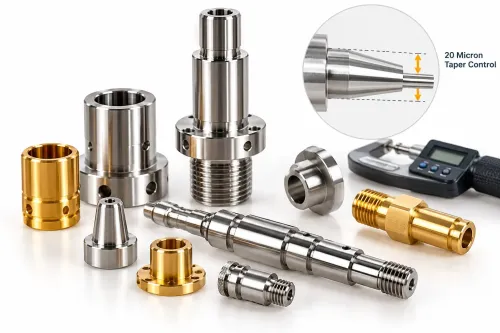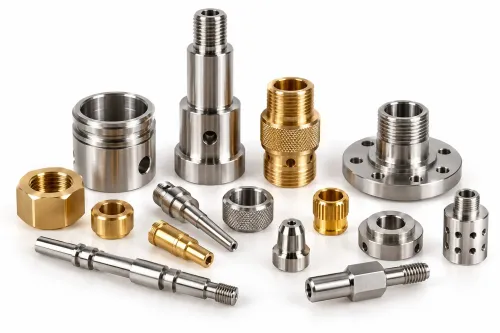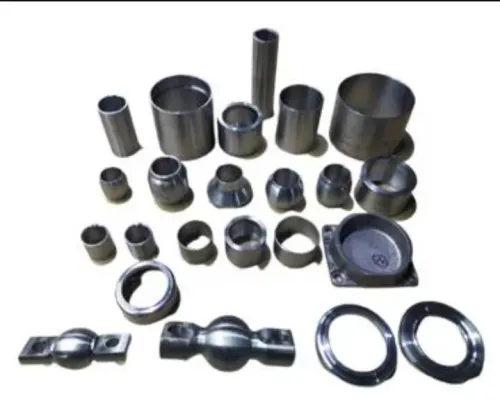
A machine bed, housing, rail support, or guide can fail long before its nominal material strength is reached if vibration, thermal movement, moisture, alignment, and machining sequence are ignored. By the end, you will be able to match cast-iron grades and rail components to their loads, specify the drawing details that control quality, and assess whether a proposed design suits Pune’s operating and storage conditions.
Key takeaways
- Use grey iron for vibration and compression; choose ductile iron for bending or impact.
- Account for Pune’s monsoon humidity, dust, temperature swings, and corrosion exposure.
- Choose CI over steel when damping, compressive strength, and casting economy matter most.
- Put grade, geometry, tolerances, defects, testing, and inspection points on the drawing.
What CI grade and component geometry suit machinery loads?
Specify the load and section condition, not merely “CI.” Grey iron suits vibration-sensitive, compression-dominated machinery; ductile iron is safer for bending, repeated tension, or impact.
| Material | Defining feature | Suitable machinery duty |
|---|---|---|
| FG 150, FG 200, FG 250 under IS 210 | Flake graphite; rising tensile class | Bases, housings, bedplates, and covers with controlled shock |
| Ductile iron | Nodular graphite; higher strength and toughness | Brackets, pulleys, and supports carrying bending or impact |
| Malleable iron | Heat-treated iron with improved ductility | Smaller fittings and parts needing limited shock resistance |
| Alloy cast iron | Added alloying for heat, wear, or corrosion resistance | Brake drums, guides, or abrasive service |
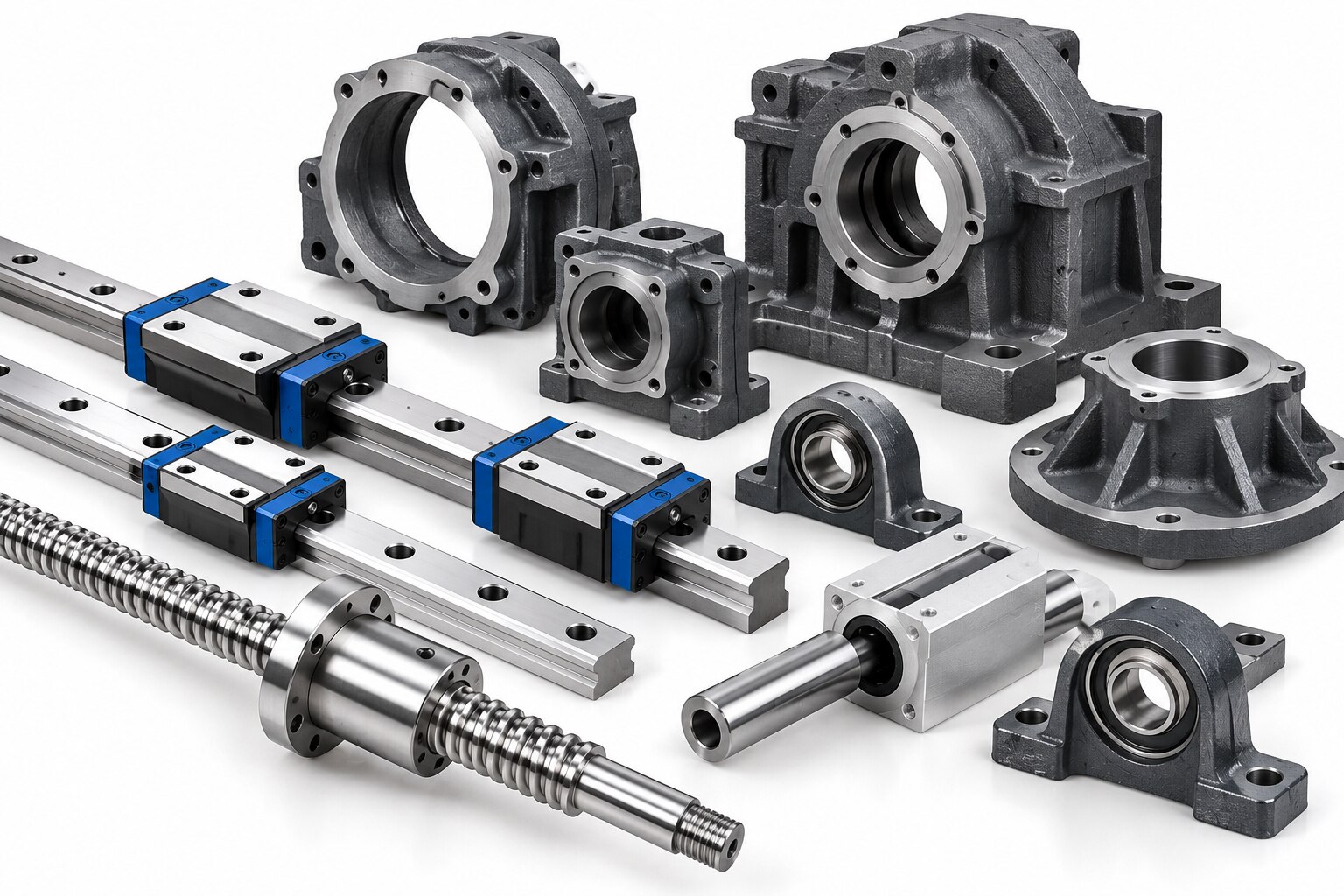
Common cast iron machinery components fit loads as follows:
- Machine bases and bedplates: compression, stiffness, and vibration damping.
- Gearbox housings and bearing caps: compression, bore stability, and moderate bending.
- Brackets and pulleys: bending and tensile loading; use ductile iron when shock is possible.
- Guide parts: sliding wear; specify hardness and surface finish.
- Brake drums: frictional heat and wear; control hardness and thermal cracking.
- Covers: low structural load, protection, and dimensional stability.
Graphite flakes make grey iron easy to machine and effective at absorbing vibration, but they interrupt the metal matrix, reducing tensile strength and notch toughness. That makes grey iron unsuitable for severe impact.
Rib junctions, bosses, and flange transitions need generous radii. Sharp changes can chill thin areas; heavy sections can develop coarse graphite, shrinkage, and local strength variation. For CI casting parts for machinery, state tensile-strength class, hardness range, section or test-bar condition, and any elongation or impact requirement. Hardness alone does not prove strength or toughness.
How do Pune’s climate and operating conditions change the design decision?
CI castings help machinery in Pune when vibration control and rigid support matter more than shock toughness. Grey-iron machine beds, housings, and bearing supports damp vibration and remain dimensionally stable, but thermal expansion still changes bearing-bore alignment and mounting-face contact as temperatures shift.
Dust changes the decision at exposed guides, covers, pulleys, and sliding interfaces. Abrasive particles enter clearances, score surfaces, and contaminate lubricant; a sound casting can outlast the machine if you shield moving parts and provide seals, scrapers, or protected covers.
Southwest-monsoon humidity creates flash rust on unpainted castings, machined faces, rails, and fasteners. The corrosion often starts at a water-trapping interface, bolt hole, pocket, or rail seat rather than across the visible casting.
Use this storage and handling checklist:
- Keep castings, rail products in Pune, and fasteners dry; never use wet packing.
- Apply temporary corrosion protection to machined faces before transport and storage.
- Prevent water from sitting in bolt holes, pockets, joint interfaces, and rail seats.
- Avoid open outdoor storage; use a covered, ventilated area with parts raised from the floor.
Specify drainage paths, protective coatings, joint sealing, and corrosion allowances where exposure is unavoidable. At a cast support-to-rail joint, uneven bearing, weld spatter, loose clips, or poor shim control can create local impact and rail-seat deformation even when the support remains sound.
That distinction matters for cast iron machinery components: the bed may stay accurate while a contaminated guide or rusted mounting face causes failure. Use CI for protected structural support, not as the primary wheel-running rail surface.
When should you choose CI over steel, aluminium, or stainless steel?
Choose CI casting parts for machinery when rigidity, vibration control, and stable support matter more than minimum weight or maximum tensile strength. Grey iron suits rigid, vibration-sensitive bases, bedplates, housings, covers, and bearing supports when impact and tensile loading remain controlled. Its graphite flakes improve damping and machinability, but reduce tensile strength and notch toughness.
| Option | Choose it when | Main limitation |
|---|---|---|
| Grey iron | Bases, bedplates, housings, covers, and bearing supports face compression, steady loads, and controlled vibration | Poor choice for severe impact, bending, or repeated tensile loading |
| Ductile iron | Shock, bending, repeated tensile loading, or higher toughness governs | Usually gives less damping than grey iron |
| Fabricated steel | You need long welded structures, high tensile capacity, repairable frames, or thin walls without a casting pattern | More vibration reaches the machine; welding can distort the frame |
| Aluminium | Low mass or heat transfer matters most | Lower stiffness, wear resistance, and vibration damping |
| Stainless steel | Corrosion exposure governs the design | Higher cost and unnecessary weight where corrosion is controlled |
Specify near-net-shape supply when machining allowance and pattern cost are acceptable; request fully machined supply when bore alignment, flatness, perpendicularity, or surface finish is critical. Confirm datum selection and allowance on the drawing.
- Rough-machine the casting and inspect movement.
- Apply stress relief or stabilising treatment where residual stress, heavy sections, or tight tolerances require it.
- Finish-machine bores, mounting faces, and sealing surfaces after treatment.
This sequence prevents residual casting stress or hard spots from moving cast iron machinery components after final machining.
What do rail products actually do in railway machinery and infrastructure?
Rail products do not all carry train wheels. Running rails are high-strength rail steels designed for rolling contact; industrial rail components serve machinery and infrastructure such as trolleys, cranes, hoists, transfer tables, and maintenance equipment. Confirm the category from the supplier catalogue, profile drawing, or equipment drawing before comparing grades or prices.
Industrial rail components may include:
- Guide rails that constrain movement and preserve travel direction
- Crane rails and support rails that transfer wheel or trolley loads
- Clips and baseplates that hold the rail seat and fastening pattern
- Fishplates and alignment parts that maintain continuity and position
- Machined rail supports and rail-equipment maintenance components that locate or replace worn assemblies
Selection follows wheel load, wheel spacing, speed, contact pattern, lateral force, support spacing, alignment, and fastening stiffness—not rail mass alone. The same profile can work on a slow trolley and fail on a crane runway with high side loads or poor alignment.
A CI casting suits a support, bracket, housing, or guide-related component because it provides rigidity and damping. It is not normally the primary wheel-running surface, where rolling-contact fatigue and impact toughness govern.
For rail products in Pune, inspect the cast-support-to-rail joint closely: specify bearing flatness, controlled shims, tight clips, removal of weld spatter, positive drainage, and no water-trapping interface. Choosing rail products and CI castings for machinery in Pune means checking the joint as carefully as the nominal material grade.
What must you put on the drawing and inspection plan before ordering?
Put the purchase specification on the drawing and inspection plan, not in a supplier’s generic quotation. For rail products and CI castings for machinery in Pune, define the service conditions, acceptance checks, and supply stage before manufacturing starts.
1. State the material grade, part weight, envelope dimensions, operating load, load direction, speed, temperature, hardness range, and any tensile, elongation, or impact requirement. “Cast iron” and hardness alone do not define performance.
2. Mark machining areas, machining allowances, datums, critical tolerances, bore alignment, flatness, perpendicularity, surface finish, leakage limits, and every inspection point. Identify bearing faces, rail seats, shim locations, fastener holes, drainage paths, and water-trapping pockets.
3. For CI casting parts for machinery, specify heat treatment or stabilising treatment where required. Control porosity, hard spots, surface defects, abrupt section changes, and hardness variation.
Agree how critical areas will be inspected: graphite flakes scatter and attenuate ultrasound, so standard steel ultrasonic testing cannot be applied to grey iron without a defined method and acceptance criteria.
4. For industrial rail components, specify profile, straightness, surface condition, steel grade, hardness, internal quality, fastening arrangement, rail-seat bearing, and alignment separately from casting acceptance. Check wheel load, wheel spacing, speed, contact pattern, lateral load, support spacing, and fastening stiffness.
5. Ask Virdaks Engineering India Private Limited to record whether the quotation covers a near-net casting, rough-machined casting, or fully machined component, then request inspection records against each specified point—not merely a material certificate.
Related products
 | Rail Parts Virdaks Engineering Overview Virdaks Engineering offers high-quality CI (Cast Iron) Casting Parts manufactured to meet the demanding requirements of... View product → |
 | Rail Parts Virdaks Engineering offers precision-manufactured rail parts for railway applications — engineered to meet rigorous standards of durability,... View product → |
Frequently asked questions
What CI grade and geometry suit machinery loads?
Grey iron suits vibration-sensitive, compression-dominated parts; ductile iron suits bending, repeated tension, and impact. Match wall thickness, ribs, fillets, and section changes to the load path.
How do Pune conditions affect CI casting design?
Specify protection and inspection for monsoon humidity, standing water, dust, temperature changes, and corrosion exposure. Control drainage, machining allowances, and surface finish where moisture can collect.
When should you choose CI over steel, aluminium, or stainless steel?
Choose CI for vibration damping, compressive loads, dimensional stability, and economical complex shapes. Choose steel for high tensile or impact loads, aluminium for low weight, and stainless steel for severe corrosion.
What do rail products do in railway machinery and infrastructure?
Rail products support movement, alignment, load transfer, guidance, fastening, and wear control in railway machinery and infrastructure. Specify the load, contact surface, wear condition, and replacement method.
What belongs on the drawing and inspection plan?
State the iron grade, standards, heat-treatment condition, dimensions, tolerances, datum scheme, surface finish, machining allowance, defect limits, hardness or tensile tests, and inspection records.
Related product
 | CI Parts Virdaks Engineering India Private Limited supplies high-quality Cast Iron (CI) parts engineered to meet strict UK industrial standards. View product → |
Keywords