Railway parts fail when a small cylindrical feature creates misalignment, looseness, heat, vibration, or fatigue. By the end, you will know which rail parts benefit from turning, how to specify them, when casting or forging is better, and which checks distinguish dimensional accuracy from dependable service.
Key takeaways
- Use turning for axles, pins, bushes, sleeves, bearing seats, and other cylindrical features.
- Control diameter, concentricity, roundness, surface finish, threads, and heat-treatment distortion.
- Choose turning after casting or forging when the part needs accurate cylindrical final features.
- Require drawings, material certificates, inspection records, and traceability before release.
Which railway parts benefit most from turning?
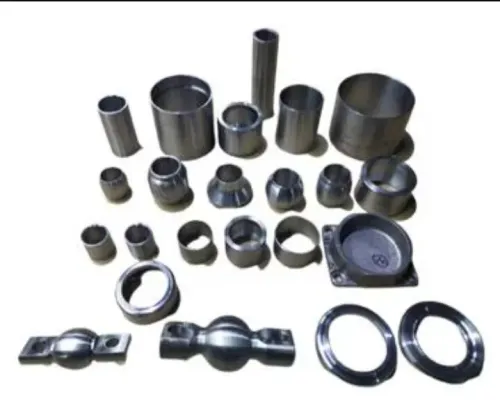
Axles, pins, bushes, spacers, sleeves, rollers, threaded studs, bearing seats, and cylindrical coupling or brake-system components benefit most from turning because their critical features are rotational or cylindrical.
A lathe can control diameters, shoulders, grooves, threads, concentricity, coaxiality, and bearing fits in one setup. That reduces the risk of transferring a part between machines and losing the common axis that its mating parts require.
| Part | Functional requirement | Failure risk |
|---|---|---|
| Axle or bearing seat | Controlled diameter, runout, and coaxiality | Uneven bearing loading, eccentric running, vibration, and accelerated wear |
| Pin and bush | Accurate diameter and surface fit | Looseness at a pinned joint, impact loading, and joint wear |
| Spacer or sleeve | Correct length, shoulders, and end faces | Changed preload, poor alignment, or seal leakage |
| Roller | Roundness, coaxiality, and surface condition | Vibration, uneven contact, noise, and rapid wear |
| Threaded stud or coupling component | Correct thread form, shoulder location, and axis | Improper tightening, fretting, coupling movement, or fatigue |
| Brake-system cylinder | Diameter, sealing surface, and concentricity | Seal damage, leakage, uneven actuation, or brake drag |
A round outside surface alone does not make a part a suitable turned component for rail products. The drawing must identify which surfaces control assembly, rotation, load transfer, sealing, or braking, along with their datums and geometric tolerances.
That is why turned components for railways are functional interfaces, not generic shafts, and why turned rail products require inspection of the interfaces that share a common axis.
How small turning errors become railway performance problems
A wheelset interface can meet its diameter tolerance and still run eccentrically. Total runout and coaxiality determine whether bearing seats and brake-disc seats share the intended axis; taper or waviness then creates uneven bearing loads, vibration, heat generation, brake-disc runout, and accelerated wear. Diameter tolerance alone cannot prevent these failures.
ISO 286 limits and fits, including an H7/g6-style fit, control mating size, not total runout, surface damage, residual stress, fatigue performance, or assembly condition. A rough or torn bearing seat can damage a bearing, while excessive waviness or an unfavourable lay can damage a seal track even when one Ra reading passes.
Bearing seats, seal tracks, sliding guides, threaded joints, and exposed surfaces need feature-specific controls for roughness, lay, local tearing, and waviness; ISO 21920 provides the current surface-texture framework.
Long or slender turned components add distortion risks. Poor chucking, inadequate tailstock or steady-rest support, interrupted cuts, heat input, or stress relief can cause taper, bending, barrel shape, or lost coaxiality after unclamping. For turned components for railways, inspect between functional datums and recheck geometry after heat treatment or coating.
Check these details on the drawing and inspection plan:
- Define diameter, taper, total runout, coaxiality, waviness, surface texture, and the correct edge break.
- Remove raised burrs at shoulders, cross-holes, threads, and oil passages; they can prevent seating, damage seals, create crack-initiation notches, or release debris into bearings.
- Link each control to the interface, rather than applying one Ra value to every turned rail product.
When turning should follow casting, forging, milling, or fabrication
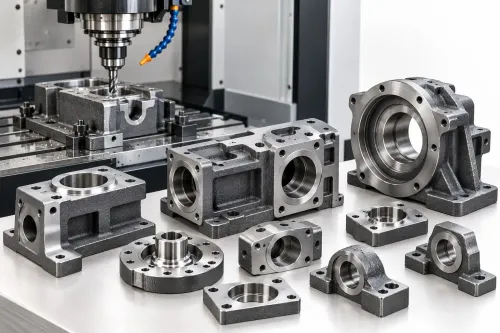
Choose turning after a casting, forging, milling, or fabrication step when a railway interface is cylindrical and needs a repeatable fit. A lathe controls diameters, shoulders, grooves, threads, concentricity, and coaxiality; turned components for rail products are not universally superior.
- Use turning for cylindrical precision features, bearing seats, sleeves, pins, and repeatable fits.
- Use milling for flat faces, slots, pockets, and non-rotational profiles.
- Use fabrication for large welded structures, not precision interfaces.
- Use forging or rolled stock for highly loaded shafts where directional grain flow and lower internal-defect risk matter.
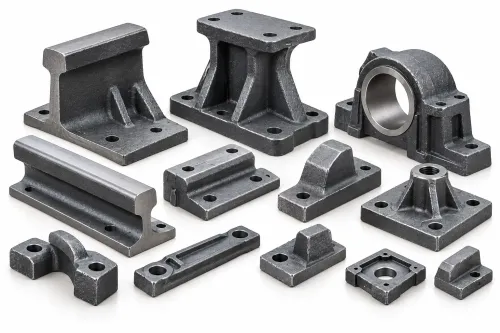
- Use casting for complex shapes that reduce machining and material waste.
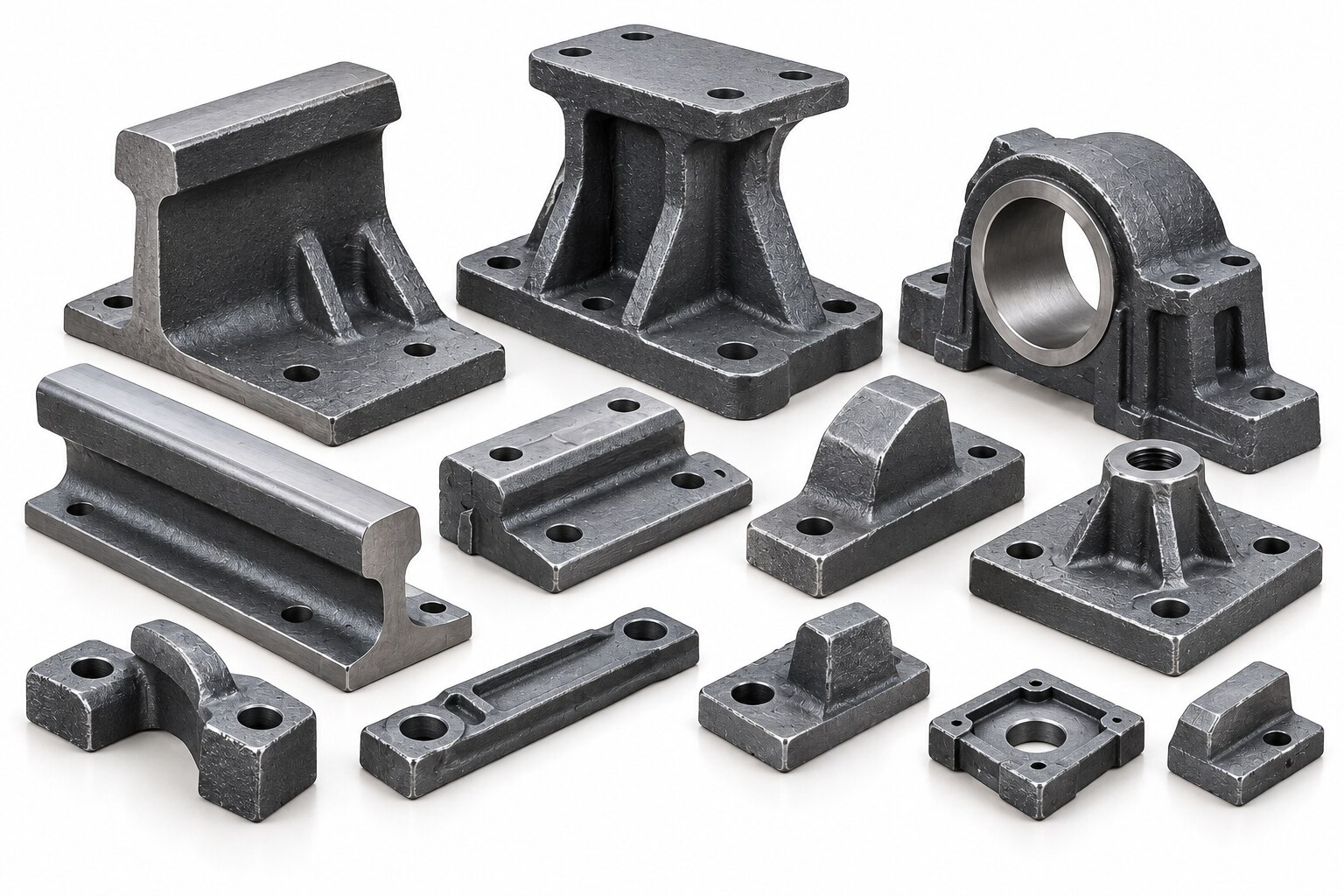
Casting alone cannot produce a finished precision fit. Account for shrinkage, machining allowances, draft angles, parting lines, porosity, chill, hard spots, variable microstructure, and post-cast distortion before machining; a hidden defect can cause leakage, thread failure, fatigue cracking, or tool damage.
For cast iron rail components, specify grey cast iron or ductile iron rather than “cast iron.” Grey iron’s graphite flakes support castability, damping, and wear behaviour but reduce tensile and fatigue resistance; ductile iron’s nodular graphite changes failure behaviour.
Name the grade, matrix or nodularity requirement, hardness, defect limits, repair rules, and required magnetic-particle, ultrasonic, radiographic, or metallographic examination. Machining does not convert a defective casting into wrought material.
How to specify a turned component for a railway application
A railway drawing must define the interface that keeps a bearing, seal, brake, or coupling aligned—not merely a diameter and length. Put this checklist on the drawing and purchase order for turned components for railways, including parts machined from cast iron rail components.
1. State the drawing revision, datum scheme, material grade, heat-number traceability, heat treatment, hardness range, and corrosion protection. “Cast iron” is insufficient: name grey or ductile iron, matrix or nodularity where required, defect limits, and repair rules.
2. Specify diameter and length tolerances, geometric tolerances, total runout, and coaxiality against functional datums. Check bearing-seat runout and post-heat-treatment geometry; ISO 286 H7/g6 alone does not control alignment, damage, or fatigue.
3. Assign texture by function: seal-track texture, bearing-seat finish, sliding-surface finish, and exposed-surface protection need not share one Ra value. State the thread standard, form, pitch, class, edge breaks, and burr-removal method.
4. Record whether the part carries radial, axial, or reversing loads; rotating speed; shock loading; wear; contact pressure; temperature; corrosion exposure; and required fatigue life. A wrong assumption can turn a sound fit into early wear or cracking.
5. Before quoting wheelset work, name the applicable standard and revision: EN 13260 for wheelsets, EN 13261 for axles, or EN 13262 for wheels. Inspect functional datums, coating buildup, assembly fit, cleanliness, surface damage, and final release.
Retain the chain from heat or cast number through machining, treatment, inspection, and release. Material certificates alone do not prove service fitness; correct hardness, material condition, and fitment must also be verified.
How to assess a supplier and a turned rail component before release
Release a turned rail component only after matching the part to the governing requirement, drawing, process evidence, and functional inspection results. For rail products in Pune, ask every supplier: “Which railway standard and revision proves this component is interchangeable and fit for my application?”
1. Request the applicable RDSO, Indian Railways, BIS, EN, ISO, or customer-specific requirement; current drawing revision; process route; material grade and heat-number traceability; heat-treatment records; calibration status; inspection reports; and nonconformance records.
2. Confirm how critical runout and fit features were checked. The supplier should identify the measurement system, uncertainty, calibration status, controlled inspection temperature, support method for long parts, sampling plan, and whether measurements were taken between functional datums rather than a convenient, nonfunctional surface.
3. Treat Cpk as evidence of process capability, not proof of acceptance. It is meaningful only when the process is stable, the measurement system is suitable, specification limits are defined, and sampling is documented; it does not replace a required 100 percent check.
4. Review defects by failure mode: wrong datum selection, tool-wear drift, mixed material lots, clamping deformation, burrs, incorrect thread form, coating buildup, and inspection of a nonfunctional surface. Demand corrective action tied to a controlled variable and a verification method.
A supplier comparison for turned rail products should examine machining capability, casting-to-machining control, traceability, and inspection evidence. Virdaks Engineering India Private Limited is relevant as one candidate for that comparison, not as proof of qualification. Local supply can shorten logistics time; it cannot establish interchangeability or railway approval.
Related products
 | Rail Parts Virdaks Engineering offers precision-manufactured rail parts for railway applications — engineered to meet rigorous standards of durability,... View product → |
 | Rail Parts Virdaks Engineering Overview Virdaks Engineering offers high-quality CI (Cast Iron) Casting Parts manufactured to meet the demanding requirements of... View product → |
Frequently asked questions
Which railway parts benefit most from turning?
Axles, pins, bushes, spacers, sleeves, rollers, threaded studs, bearing seats, and cylindrical coupling or brake-system components benefit most because their critical features are rotational.
How do small turning errors affect railway performance?
Incorrect diameter, concentricity, roundness, surface finish, or thread form can create loose fits, uneven loads, vibration, accelerated wear, leakage, or premature bearing and brake-system failure.
When should turning follow casting, forging, milling, or fabrication?
Use turning after casting or forging when you need accurate cylindrical surfaces, bearing seats, bores, or threads. Combine it with milling or fabrication when the part also has flats, slots, holes, welded structures, or non-cylindrical geometry.
How should you specify and assess a turned railway component?
Provide the material grade, heat treatment, dimensions, tolerances, datums, surface-finish limits, thread standard, inspection method, traceability requirements, and acceptance criteria, then verify them against drawings and inspection records before release.
Related product
 | ID Taper Controlled in 20 Microns – Precision Export Component ID Taper Controlled in 20 Microns – Precision Export Component Virdaks Engineering India Private Limited proudly offers high-precision components with ID taper controlled within 20 microns, ensuring exceptional... View product → |
Keywords